


 癌症的基本特征包括细胞增殖、血管生成、迁移、凋亡逃避机制和细胞永生等。找到癌症发生过程中这些通路的关键标记物和对应的抗体用于检测至关重要。
 为您推荐一个泛素化位点预测神器——泛素化分析工具,可以为您的蛋白的泛素化位点作出预测和评分。
 细胞自噬受体图形绘图工具为你的蛋白的细胞受体结合位点作出预测和评分,识别结合到自噬通路中的蛋白是非常重要的,便于让我们理解自噬在正常生理、病理过程中的作用,如发育、细胞分化、神经退化性疾病、压力条件下、感染和癌症。
CLCN2 Antibody (N-term)
Affinity Purified Rabbit Polyclonal Antibody (Pab)
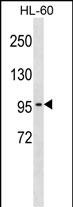
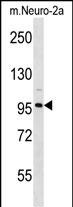
- 产品详情
- 实验流程
- 背景知识
Application 
| WB, E |
|---|---|
| Primary Accession | P51788 |
| Other Accession | P35525, P51789, NP_001164559.1 |
| Reactivity | Human, Mouse |
| Predicted | Rabbit, Rat |
| Host | Rabbit |
| Clonality | Polyclonal |
| Isotype | Rabbit IgG |
| Calculated MW | 98535 Da |
| Antigen Region | 209-237 aa |
| Gene ID | 1181 |
|---|---|
| Other Names | Chloride channel protein 2, ClC-2, CLCN2 |
| Target/Specificity | This CLCN2 antibody is generated from rabbits immunized with a KLH conjugated synthetic peptide between 209-237 amino acids from the N-terminal region of human CLCN2. |
| Dilution | WB~~1:1000 E~~Use at an assay dependent concentration. |
| Format | Purified polyclonal antibody supplied in PBS with 0.09% (W/V) sodium azide. This antibody is purified through a protein A column, followed by peptide affinity purification. |
| Storage | Maintain refrigerated at 2-8°C for up to 2 weeks. For long term storage store at -20°C in small aliquots to prevent freeze-thaw cycles. |
| Precautions | CLCN2 Antibody (N-term) is for research use only and not for use in diagnostic or therapeutic procedures. |
| Name | CLCN2 {ECO:0000303|PubMed:29403011, ECO:0000312|HGNC:HGNC:2020} |
|---|---|
| Function | Voltage-gated and osmosensitive chloride channel. Forms a homodimeric channel where each subunit has its own ion conduction pathway. Conducts double-barreled currents controlled by two types of gates, two fast glutamate gates that control each subunit independently and a slow common gate that opens and shuts off both subunits simultaneously. Displays inward rectification currents activated upon membrane hyperpolarization and extracellular hypotonicity (PubMed:16155254, PubMed:17567819, PubMed:19191339, PubMed:23632988, PubMed:29403011, PubMed:29403012, PubMed:36964785, PubMed:38345841). Contributes to chloride conductance involved in neuron excitability. In hippocampal neurons, generates a significant part of resting membrane conductance and provides an additional chloride efflux pathway to prevent chloride accumulation in dendrites upon GABA receptor activation. In glia, associates with the auxiliary subunit HEPACAM/GlialCAM at astrocytic processes and myelinated fiber tracts where it may regulate transcellular chloride flux buffering extracellular chloride and potassium concentrations (PubMed:19191339, PubMed:22405205, PubMed:23707145). Regulates aldosterone production in adrenal glands. The opening of CLCN2 channels at hyperpolarized membrane potentials in the glomerulosa causes cell membrane depolarization, activation of voltage-gated calcium channels and increased expression of aldosterone synthase, the rate-limiting enzyme for aldosterone biosynthesis (PubMed:29403011, PubMed:29403012). Contributes to chloride conductance in retinal pigment epithelium involved in phagocytosis of shed photoreceptor outer segments and photoreceptor renewal (PubMed:36964785). Conducts chloride currents at the basolateral membrane of epithelial cells with a role in chloride reabsorption rather than secretion (By similarity) (PubMed:16155254). Permeable to small monovalent anions with chloride > thiocyanate > bromide > nitrate > iodide ion selectivity (By similarity) (PubMed:29403012). |
| Cellular Location | Cell membrane; Multi-pass membrane protein. Basolateral cell membrane; Multi-pass membrane protein. Cell projection, dendritic spine membrane {ECO:0000250|UniProtKB:P35525}; Multi-pass membrane protein. Cell projection, axon {ECO:0000250|UniProtKB:P35525} Note=Sorting to the basolateral membrane is mediated by AP-1 clathrin adapter (PubMed:16155254). Localizes at axon initial segments and dendritic shaft and spikes. Colocalizes with HEPACAM and GFAP at astrocyte end-foot in contact with brain capillaries and other glial cells (By similarity) (PubMed:22405205, PubMed:23707145) {ECO:0000250|UniProtKB:P35525, ECO:0000250|UniProtKB:Q9R0A1, ECO:0000269|PubMed:16155254, ECO:0000269|PubMed:22405205, ECO:0000269|PubMed:23707145} |
| Tissue Location | Ubiquitously expressed. Moderately expressed in aortic and coronary vascular smooth muscle cells and expressed at a low level in aortic endothelial cells. Expressed in the adrenal gland, predominantly in the zona glomerulosa (PubMed:29403011). Expressed in white mater perivascular astrocytes and ependymal cells (at protein level). |
For Research Use Only. Not For Use In Diagnostic Procedures.
Provided below are standard protocols that you may find useful for product applications.
BACKGROUND
The transmembrane protein encoded by this gene is a voltage-gated chloride channel that maintains chloride ion homeostasis in various cells. Defects in this gene may be a cause of certain epilepsies. Four transcript variants encoding different isoforms have been found for this gene.
REFERENCES
Scheper, G.C., et al. Genet Test Mol Biomarkers 14(2):255-257(2010)
Cornejo, I., et al. J. Cell. Physiol. 221(3):650-657(2009)
Thompson, C.H., et al. J. Biol. Chem. 284(38):26051-26062(2009)
Kleefuss-Lie, A., et al. Nat. Genet. 41(9):954-955(2009)
Klaus, F., et al. Biochem. Biophys. Res. Commun. 381(3):407-411(2009)

终于等到您。ABCEPTA(百远生物)抗体产品。
点击下方“我要评价 ”按钮提交您的反馈信息,您的反馈和评价是我们最宝贵的财富之一,
我们将在1-3个工作日内处理您的反馈信息。
如有疑问,联系:0512-88856768 tech-china@abcepta.com.


